
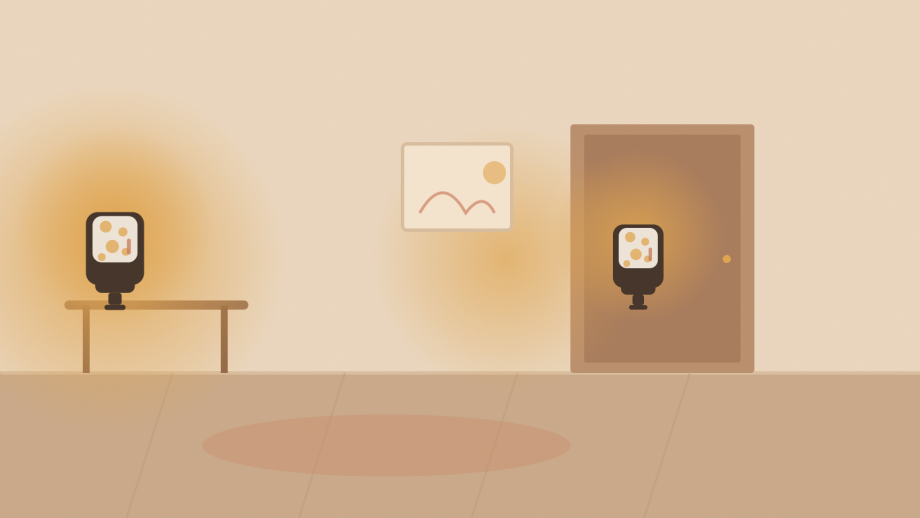
Choose plug-in night lights by looking at the outlet before the light: what the plug blocks, whether the sensor faces the right way, how low the dimmer goes, and whether the unit is certified for use in Australia. The OZShopper two-pack lists a plug-in design, an automatic light sensor, a slide dimmer, a 3000 K warm glow and a crystal bubble finish, with no assembly required. The listing does not state the plug standard, the sensor distance, the wattage, the lumen output, the dimming range or whether the body covers the second socket, so check those details before you buy a pair for a hallway.
1. Look at the outlet before the light
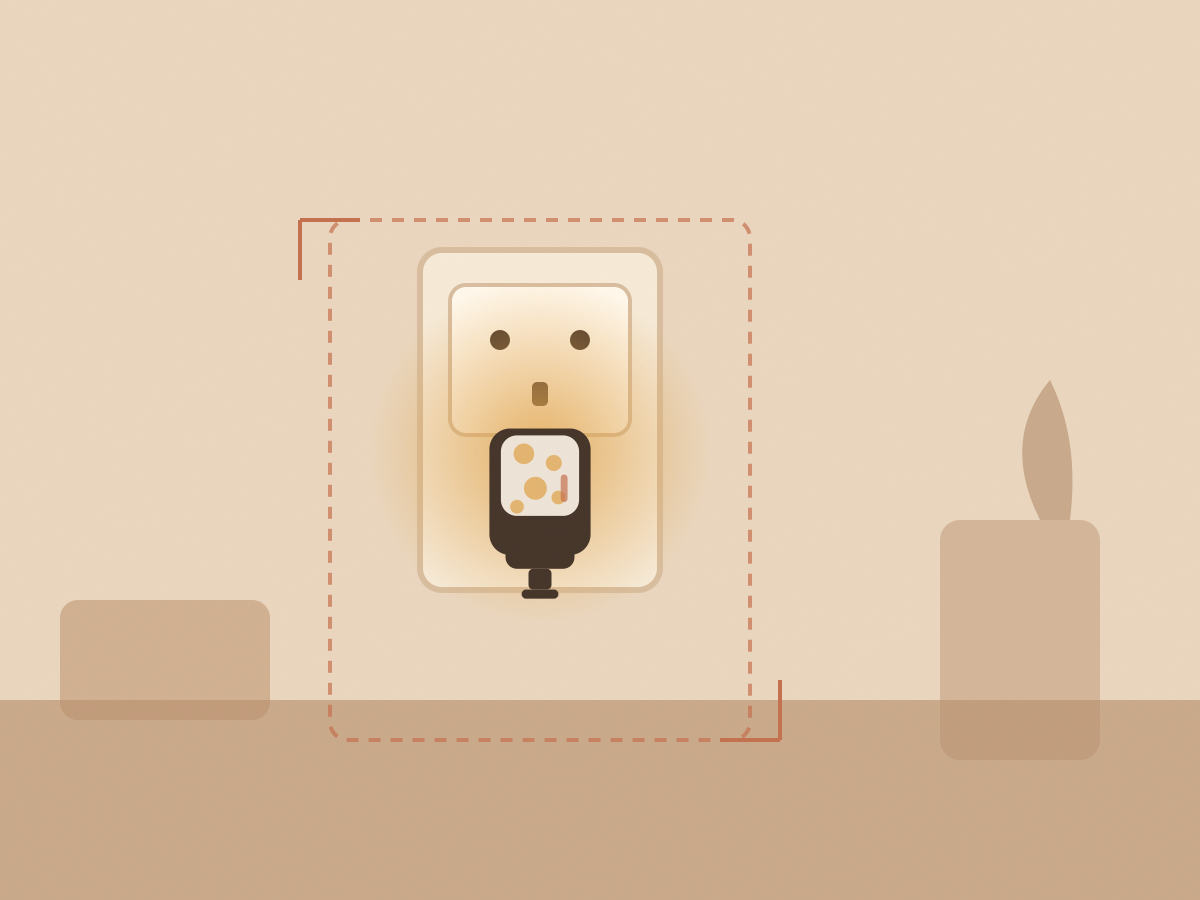
A plug-in night light lives in a wall socket, so the socket decides whether the product works for you. Hallway outlets are often low, behind a console, or part of a double outlet that also runs a lamp. The light body in the listing is roughly 12 by 11 by 12.5 centimetres packed, and the two units weigh 0.555 kilograms together, which suggests a body large enough to cover part of a neighbouring socket.
Measure the outlet and the space around it. If the light is wider than the socket plate, it may stop a second plug going in, or it may sit against a skirting board and point the sensor at the floor. Also check that the outlet is not switched off by a wall switch you use every day.
Ask for the plug type and the certification marking. For an Australian home you want a plug that matches the local socket and a unit marked for the relevant standard. The listing does not show this, so it is a fair question before you order.
For a hallway, one light is often enough near the middle of the path. For a bedroom, think about whether you want the light at the outlet you use for a lamp, because the two may compete for space.
2. Decide whether automatic switching suits the room
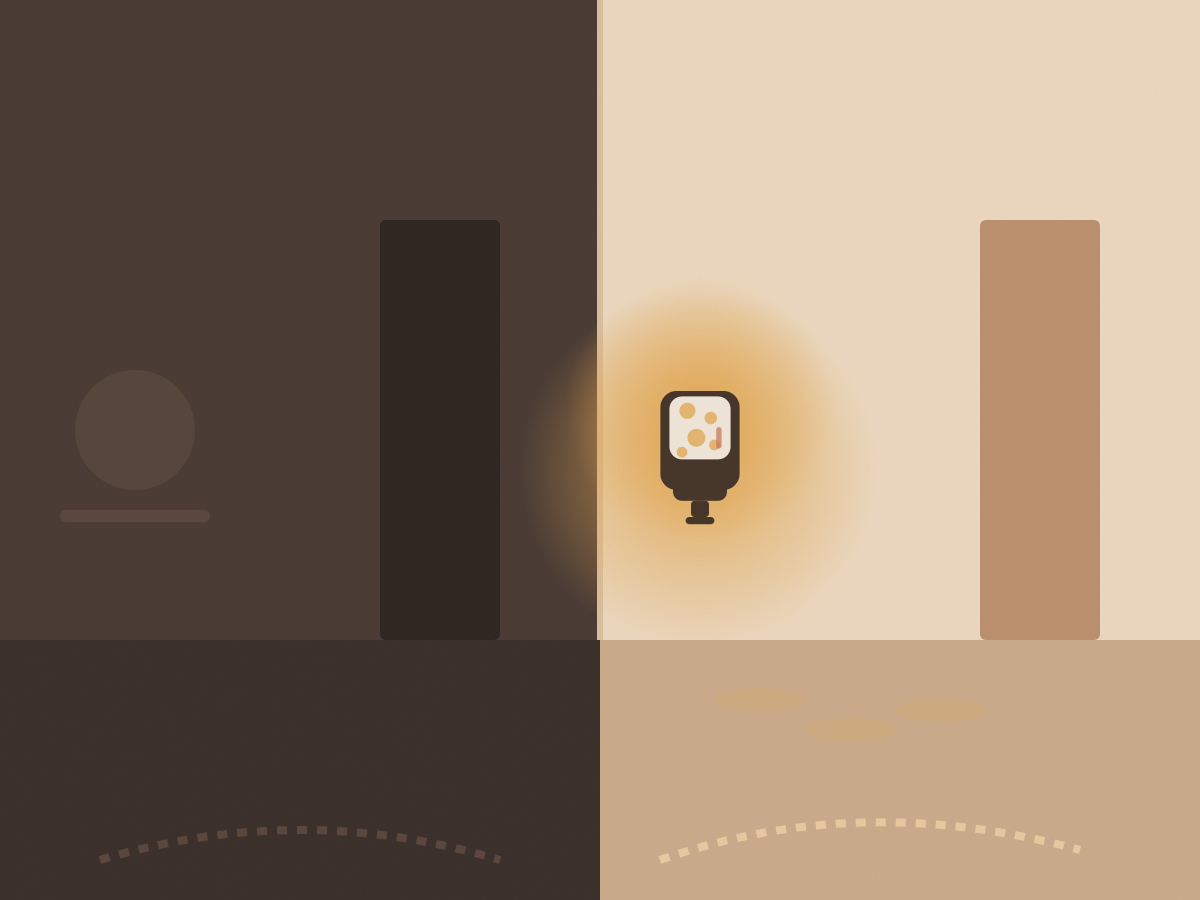
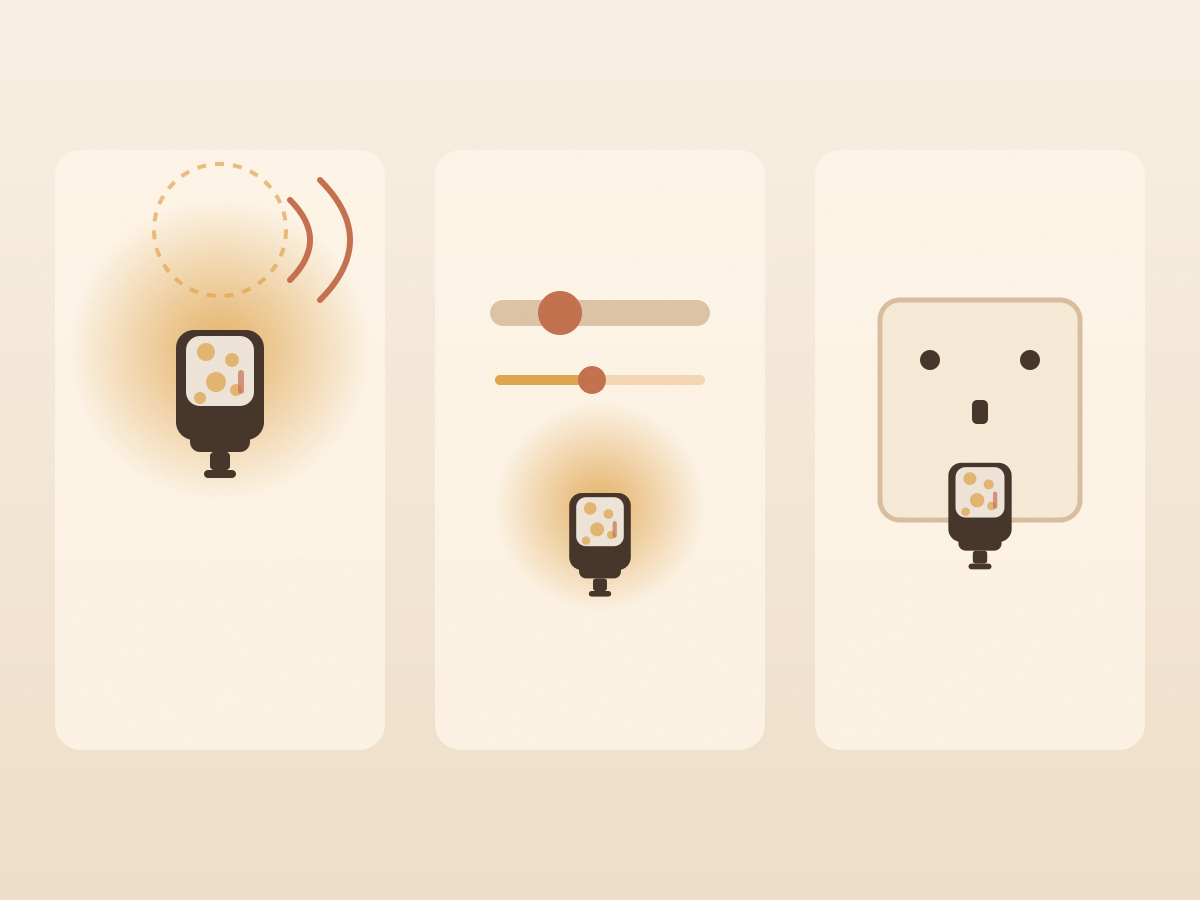
The light sensor turns the lamp on when the room darkens, which is exactly what you want in a hallway at night and sometimes exactly what you do not want in a bedroom. The listing does not state the threshold or the sensor’s detection angle, so you cannot tell from the page how early it comes on or whether a nearby lamp will keep it off.
In a hallway, automatic switching is convenient because nobody has to find a switch in the dark. In a bedroom, it can be annoying if the light comes on while you are watching a film or trying to sleep. Some plug-in lights have a switch to disable the sensor; this listing does not mention one, so confirm before you buy.
Sensor direction matters too. If the sensor faces a bright window, the light may stay off when you need it. If it faces a dark corner, it may switch on earlier than you expect.
3. Use the dimmer to match the job
The slide dimmer is the most useful feature for a night light, because full brightness is rarely what you want at 2 am. A dim setting near the floor is enough to see a doorway without waking anyone, while a brighter setting helps on stairs or in an unfamiliar house.
The listing does not state the dimming range or the maximum output, so treat the dial as a relative control rather than a calibrated one. Start low and increase only if you need more light. In a hallway, place the light so the glow falls across the floor rather than into your eyes.
Colour temperature is stated at 3000 K, which is a warm white similar to a traditional incandescent lamp. That is a comfortable choice for bedrooms and living areas. It is not a replaceable bulb, so the colour is fixed for the life of the unit.
4. Check certification, heat and child safety
Any mains-powered light should carry the certification mark required in your country, and the plug should match the local socket. The listing does not publish either detail, so ask. Certification is not a guarantee of quality, but it is evidence that the electrical design has been assessed.
Plug-in lights can become warm in use, especially at full brightness. Do not cover them with curtains, bedding or furniture, and do not use one behind a door where it can be knocked. Keep the unit away from water, and do not use it in a bathroom unless the listing states a suitable rating; this one does not.
For a child’s room, check that the light does not block the socket in a way that makes unplugging difficult, and that the body cannot be pulled out by a cord because there is no cord to pull. The unit still sits in a live socket, so an adult should fit it and check it periodically for looseness.
The two-pack of plug-in night lights suits a hallway and a spare bedroom if the outlets are free and the sensor suits your routine. Confirm the plug standard, certification and socket clearance before you commit to a pair.
Before you buy: a short checklist
- Check the outlet for space and a nearby wall switch.
- Ask for the plug standard and certification marking.
- Confirm whether the light covers the second socket.
- Ask whether the sensor can be switched off.
- Check the stated wattage and brightness.
- Confirm the light is not for bathroom use unless rated.
- Plan a position where the glow does not shine into bed.
- Check the current price, stock and shipping on the listing.
Two common questions
Do these lights need batteries?
No. They are described as plug-in wall lights, so they draw power from the socket. That also means they stop working during a power outage.
Can they be used in a bathroom?
The listing does not state a moisture or IP rating, so do not assume they are suitable. Ask the seller before using one near a basin, bath or shower.