

Choose a clip-on tuner by matching it to the instruments you actually play, checking that the clip grips each headstock, and deciding whether you want a simple display or extra modes. The OZShopper tuner lists support for guitar, bass, ukulele, violin and mandolin, plus a chromatic mode, a vibration sensor, a digital display and automatic shut-off. It weighs 28 grams and measures about 4 by 4 by 5 centimetres. The listing does not state accuracy, battery type, whether a battery is included, or whether it has a metronome, so confirm those before you buy.
1. Match the tuner to the instruments in your house
Instrument lists are useful, but they are not all equal. A tuner designed around guitar and bass may still offer a chromatic mode that lets you tune almost anything by note name. That is the mode to look for if you play more than one instrument or want to tune a guest’s ukulele at a party.
If you only play guitar, a simple guitar mode with clear string names is faster. If you double on bass, check that the display and sensor cope with the lower register, because low notes produce slower, less obvious vibrations than the high strings. The listing does not give a frequency range, so this is a question for the seller rather than an assumption.
Violin and mandolin are listed, but they are not shaped like a guitar. On a violin the tuner usually clips to the scroll or the pegbox, which is narrower and more delicate. A clip that opens wide enough for a guitar headstock may be loose on a violin, and one that grips a violin tightly may be awkward on a thick bass neck. If you play both, check the clip’s opening range.
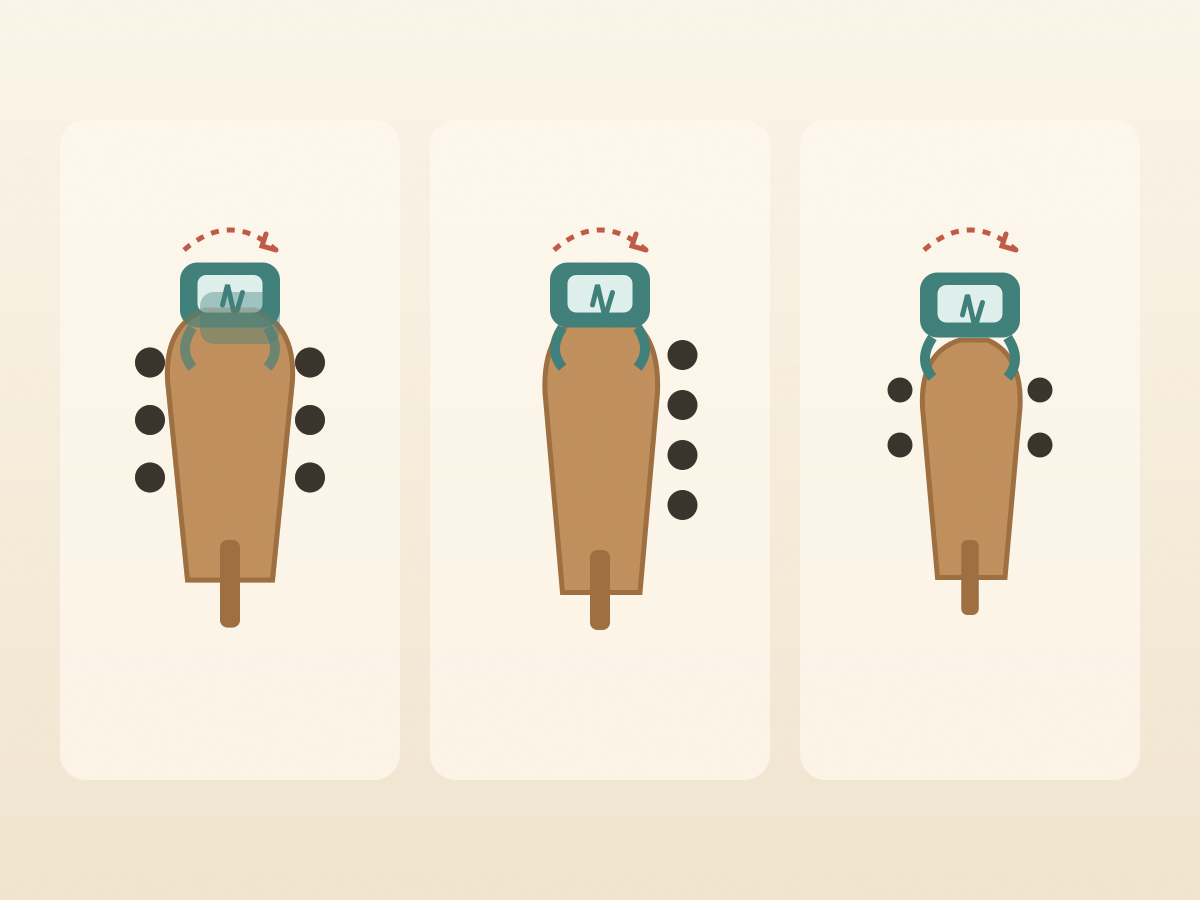
2. Check how the clip fits each headstock
The clip is the part that decides whether the tuner is usable, and it is the part the listing describes least. It does not state the jaw opening, the padding material or the clamping force.
On a guitar or bass, the tuner normally sits on the flat face of the headstock, clear of the tuning pegs. On a ukulele, the headstock is small, so a large tuner can feel top-heavy or cover the pegs. On a violin, the scroll is curved and narrow, and the clip may need to sit at an angle.
A padded jaw reduces the chance of marking a lacquered finish, but padding also compresses over time. If you keep the tuner on one instrument permanently, check the finish periodically, especially on a soft or newly applied lacquer.
Weight matters here too. At 28 grams the tuner is light enough to leave on a headstock during a session, but a heavy clip on a thin ukulele neck can affect how the instrument balances. Take it off when you put the instrument back in its case if the fit feels tight.
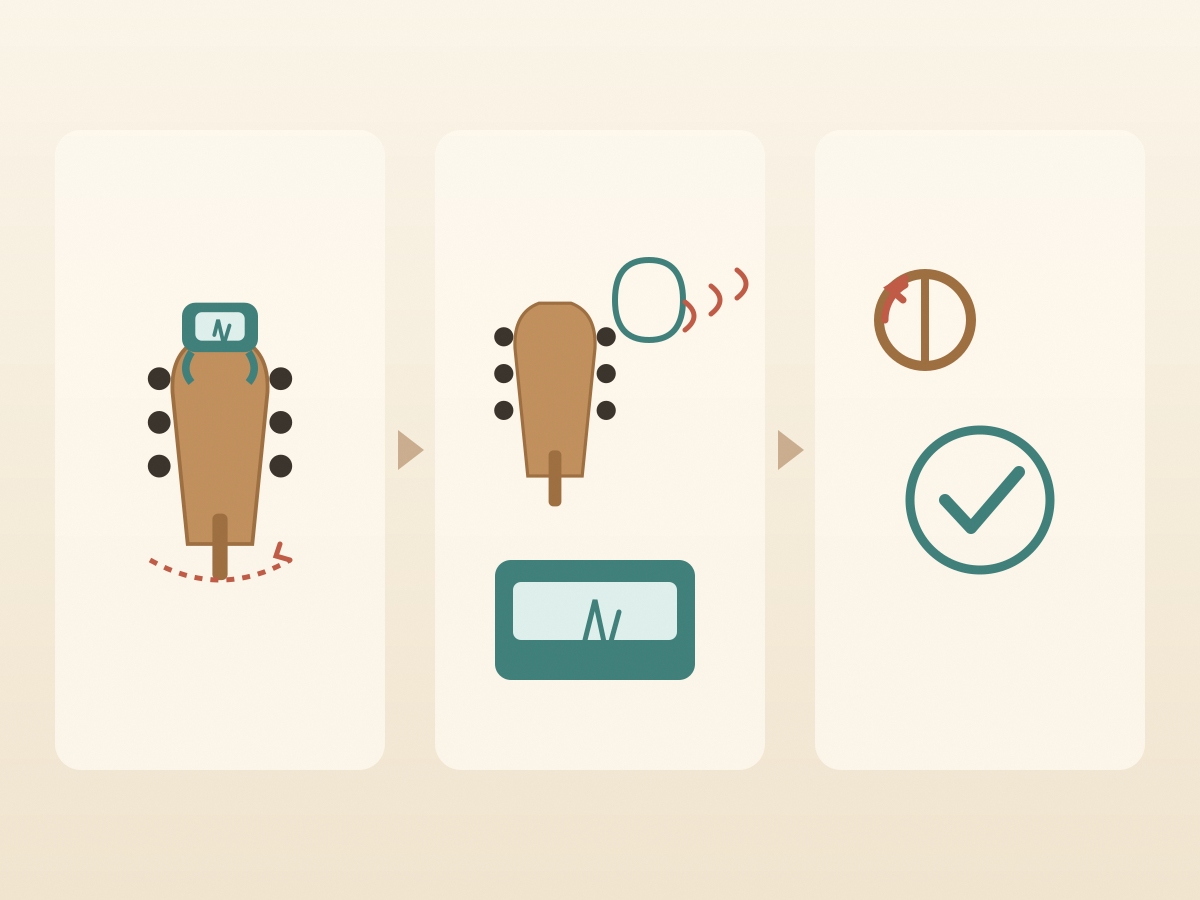
3. Understand what a vibration sensor does and does not fix
A vibration sensor reads the instrument through the clip rather than listening through a microphone. That is why clip-on tuners work in a noisy room, where a phone app can struggle to separate your guitar from a conversation or a television.
It is not magic. The sensor still needs a clean vibration, so tune one string at a time and let the note settle. Plucking hard can produce a sharp initial reading that settles flat; plucking softly can be too quiet for the sensor.
Very low bass notes are the usual weak point. The vibration is slower and the tuner may take longer to decide. If you play a five-string bass or drop tunings, give the display a moment before you turn the peg again.
Background noise still matters in one way: it can mask the note you are trying to hear while you tune. The sensor may be unaffected, but your ears are not. In a loud room, use the display as the reference rather than trying to tune by ear.

4. Plan for batteries, readability and storage
The listing mentions automatic shut-off but not the battery type. Some tuners use a coin cell, some use AAA, and some are rechargeable. Ask before you buy, and check whether a battery is included. A tuner that shuts off automatically is easier on the battery, but it can also switch off while you are thinking, so a display that holds the last note for a few seconds is helpful.
Readability depends on where the tuner sits. On a guitar headstock, the screen faces the player at an angle, which is fine standing or seated. On a violin scroll the angle can be awkward, and on a dark stage a backlit display helps. The listing calls the display clear and digital but does not mention backlighting, so check if you play in low light.
Storage is simple: a soft bag, a pocket in a gig bag, or the accessory compartment of a case. Keep it away from heat and loose coins that can scratch the screen. At this size it is easy to lose, so pick a fixed pocket.
The clip-on tuner covers a useful range of instruments for a small outlay. Confirm accuracy, battery type and clip opening before you rely on it for a whole band.
Before you buy: a short checklist
- Confirm the tuner supports each instrument you play.
- Ask for the clip’s jaw opening and padding material.
- Check whether chromatic mode covers alternate tunings.
- Ask about accuracy and the tuning range.
- Confirm the battery type and whether one is included.
- Check whether the display is backlit for dark stages.
- Decide where the tuner will live between sessions.
- Check the current price, stock and shipping on the listing.
Two common questions
Will it work on a violin as well as a guitar?
The listing says it supports violin and mandolin as well as guitar, bass and ukulele. The clip opening is not stated, so check that it grips a narrow scroll without excessive force.
Can you tune by ear instead?
You can, and experienced players often do. A clip-on tuner is most useful in noisy rooms, on unfamiliar instruments, or when you need a quick reference between songs.