
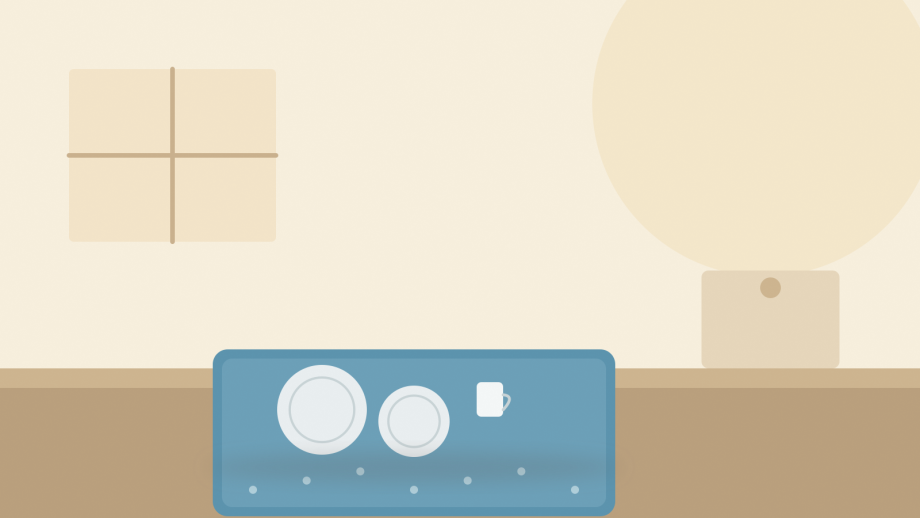
Choose a dish drying mat by measuring the counter you actually have, deciding how many dishes it must hold at once, and planning where it will dry between uses. This blue mat is described as highly absorbent, reusable and easy to roll away, but the listing does not give dimensions, fabric composition, absorbency figures or washing instructions. Confirm those four gaps before you buy, especially in a small kitchen where a few centimetres decide whether the bench still works.
1. Measure counter space before selecting a mat
Start with the distance between the sink edge and the first thing you need to use: a kettle, a chopping board or the front of a cupboard. A mat that fills that space leaves nowhere to work, and one that is too small forces you to stack dishes, which slows drying.
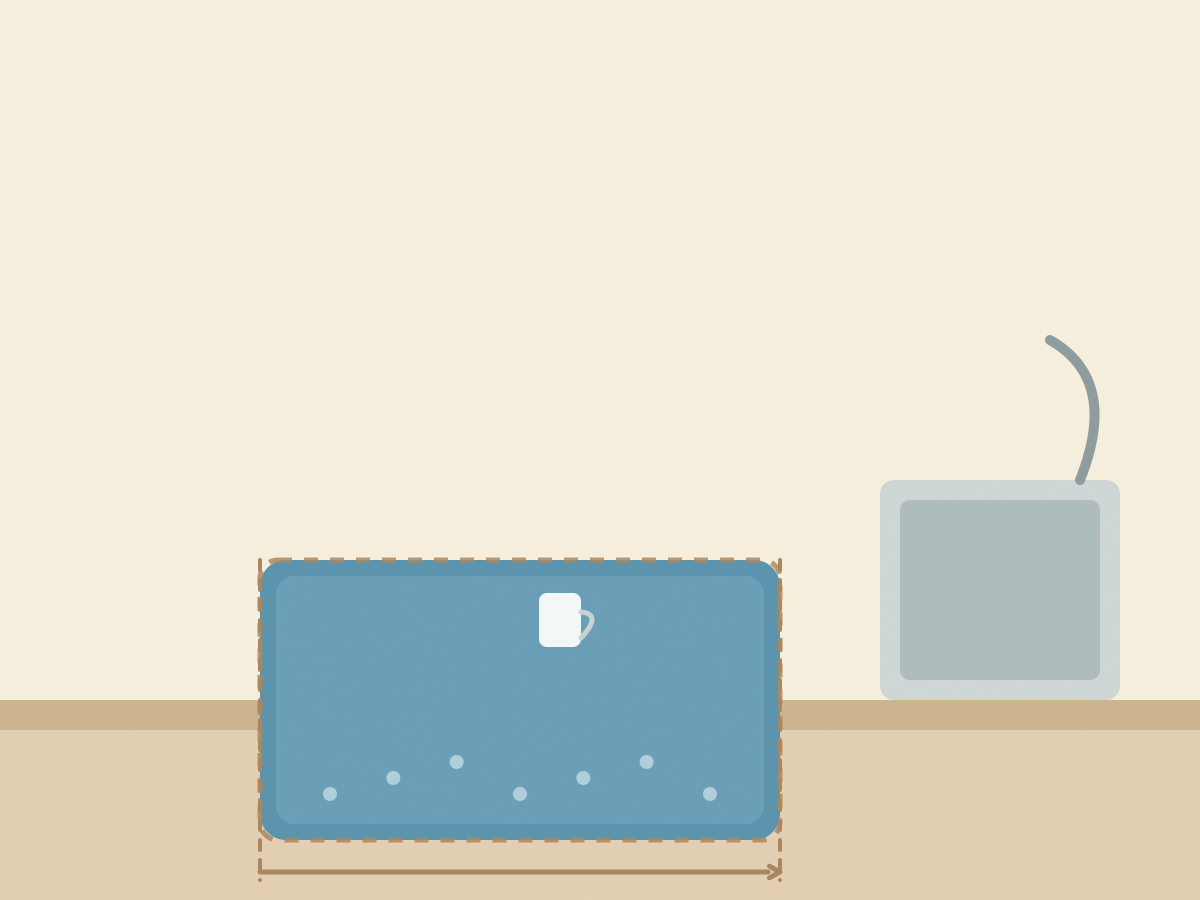
The listing does not publish the mat’s dimensions, so ask for them before ordering. Then mark the footprint on your bench with a tea towel and live with it for a day. Check that the mat clears the sink’s tap swing, the fridge door and any drawer that pulls out.
Think about the mat’s position relative to the sink. A mat beside the sink catches drips as you move dishes; a mat across the walkway becomes a trip hazard. If your bench is very narrow, a mat that folds or rolls may be more practical than a rigid rack.
Also check what sits under the counter. A mat traps moisture against stone, timber or laminate, so a dry counter between uses matters more than the mat’s absorbency claim.
2. Arrange dishes with airflow between items
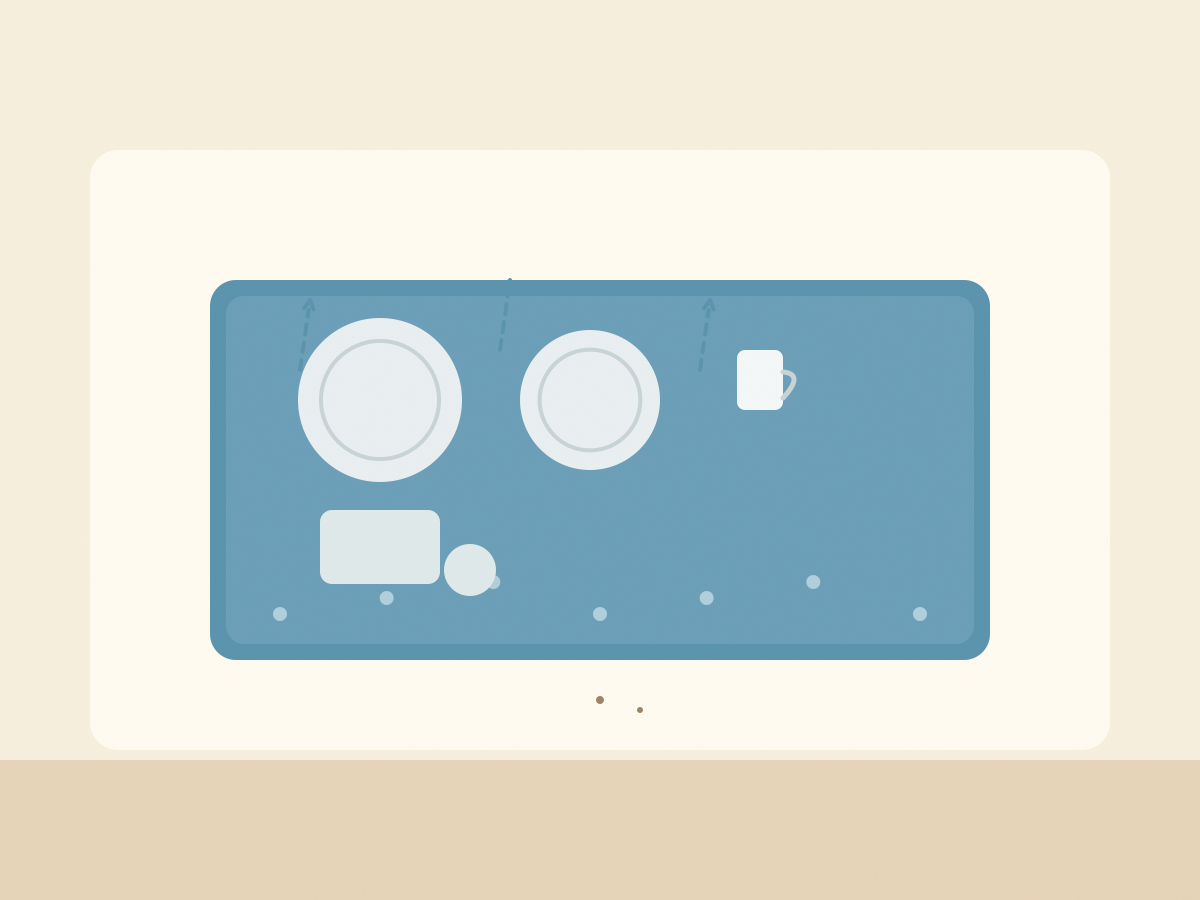
A mat dries dishes by spreading water and letting air reach the surfaces. Stacking plates flat on top of each other works against both. Stand plates on edge where possible, lean them against a wall or a rack, and leave a gap between each one.
Cups and glasses dry best upside down, but not with their rims flat against the mat. Angle them so air can move underneath, or place them over the prongs of a small rack. Cutlery should be spread out rather than bundled, because a tight bundle traps water between handles.
Pots and pans need more space than plates and hold water in their rims. Turn them so the water runs off, and give them their own area rather than balancing them on top of other dishes.
The listing says the mat suits dishes, pots, pans, utensils and glassware, and that it protects surfaces from scratches. Those are reasonable uses for a soft mat, but a heavy cast-iron pan still needs care: put it down gently and let it cool first.
3. Compare everyday drying with occasional use
A mat is a good fit for a small household that washes a few items at a time. It is less suitable for a family that produces a full sink of dishes every evening, because the mat has a fixed capacity and no vertical structure. In that case, a rack over a draining board usually holds more.
Occasional use is where a mat shines. It can sit under a coffee machine, a blender or a mixer to catch drips, then roll away when the bench is needed for food preparation. The listing mentions these uses, but it does not state whether the mat is heat resistant, so keep hot appliances off it unless the seller confirms.
Two smaller mats can be more flexible than one large mat: one by the sink for dishes, one under the coffee station. They are easier to wash and easier to store, and you can rotate them while one dries.
Think about colour and visibility as well. A blue mat shows water marks less than a pale one, but it also hides a damp patch. Check the mat’s underside when you lift it, not just the top.
4. Plan mat washing and full drying
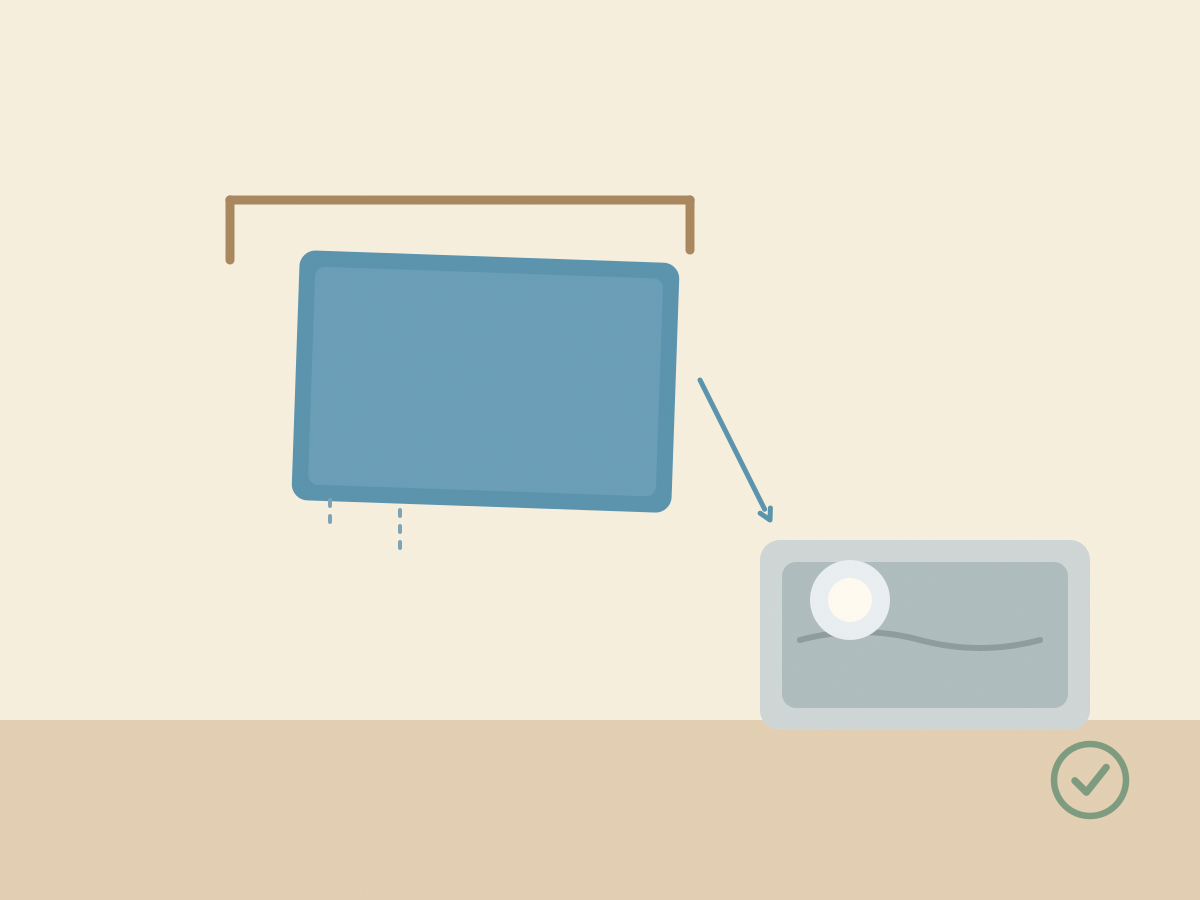
The listing says the mat is easy to wipe down, wash and reuse, but it does not give machine-wash settings, a maximum temperature or a drying method. Until you have those details, wash it by hand with mild dish liquid, rinse it well and hang it where air can reach both sides.
Do not fold a damp mat and put it in a cupboard. Trapped moisture is what makes kitchen textiles smell. If the mat has a loop or a hanging tab, use it; otherwise drape it over a rack or the sink divider.
Rotate between two mats if you use one daily. That gives each mat time to dry completely and makes it easier to notice wear, thinning or a damaged edge. Replace a mat that stays damp or develops a smell that washing does not fix.
The blue dish drying mat is a practical small-kitchen accessory if you measure first and accept that it holds a limited number of items. Ask for the dimensions, material and washing instructions before you order.
Before you buy: a short checklist
- Measure the free counter space beside the sink.
- Ask for the mat’s exact dimensions.
- Check that it clears the tap, doors and drawers.
- Ask what the mat is made from.
- Confirm whether it is heat resistant.
- Ask for washing and drying instructions.
- Decide whether one mat or two smaller mats suit you.
- Check the current price, stock and shipping on the listing.
Two common questions
What are the exact mat dimensions?
The listing does not state them. Ask the seller for length, width and thickness, then measure your bench before ordering.
Can it be used beneath a coffee machine?
The listing suggests coffee stations as a use, but it does not state heat resistance. Check with the seller if your machine gets hot underneath.