

Measure the hanging space before you buy, then decide what belongs on each of the six layers. This listing describes a hanging organiser with six shelves, purpose-made drawers, three side pockets, a stated 40 kg total capacity and dimensions of 42.5 by 12.2 by 13.6 inches. Those figures need checking against your wardrobe, and the capacity claim is the seller’s, not an independent rating.
1. Measure the wardrobe before buying
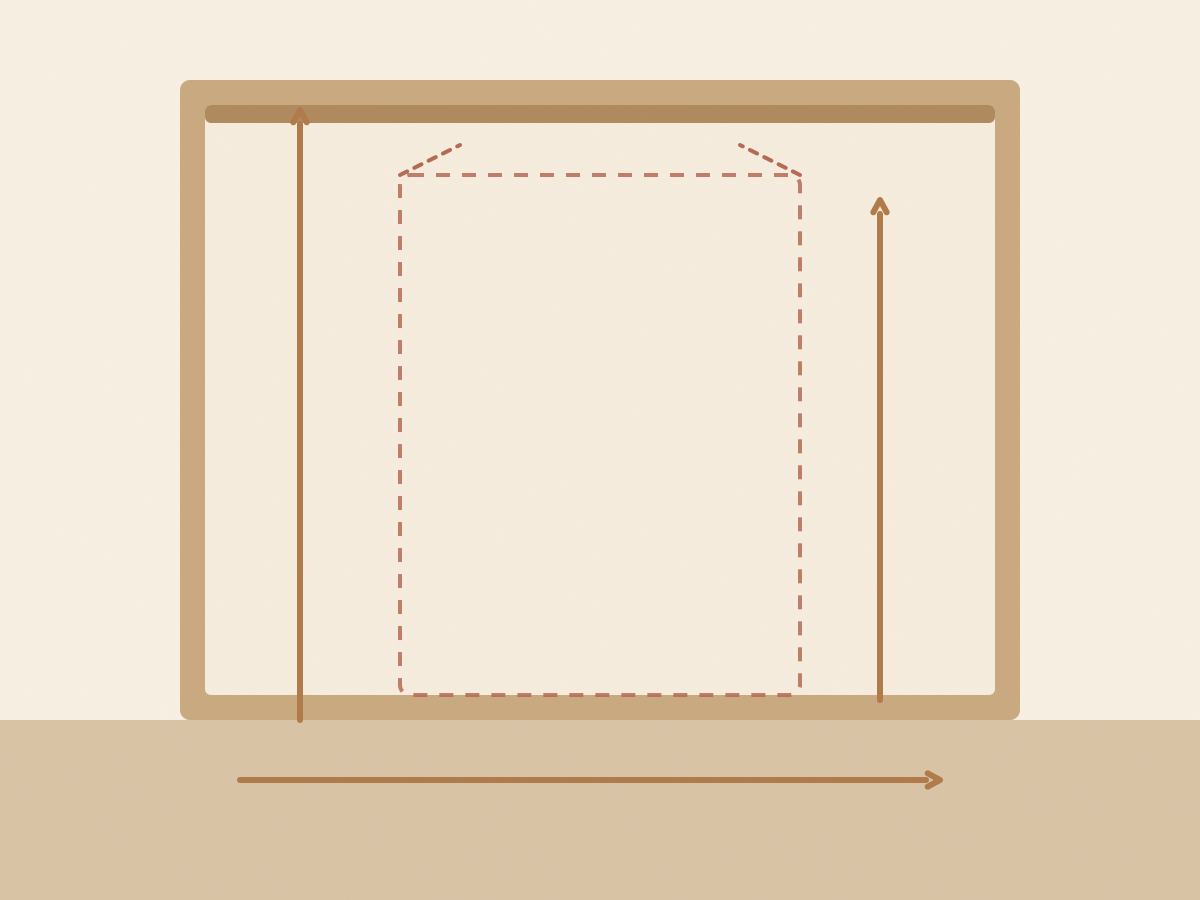
The listed dimensions are 42.5 inches long, 12.2 inches wide and 13.6 inches deep, which is roughly 108 by 31 by 34.5 cm. The longest figure is the vertical drop, so the first check is the height from the rail to the wardrobe floor or the top of any drawer unit below.
Measure the internal width and depth as well. The organiser needs to hang without pressing against the doors, and the shelves need to sit clear of the side walls so you can reach the pockets. A wardrobe with a sloping ceiling or a low shelf above the rail may not have the clearance the listing assumes.
Check the rail itself. The listing describes a thick Velcro rail attachment with extra rivets, but it does not state a rail diameter or a fixing method. Look at how your rail is supported and whether the wardrobe frame can take a loaded organiser. A flimsy rail or a loose bracket is a poor foundation.
Finally, measure the door swing. A full organiser bulges beyond the rail, and a shallow wardrobe may not close once the shelves are packed.
2. Assign clothing and shoes to six layers
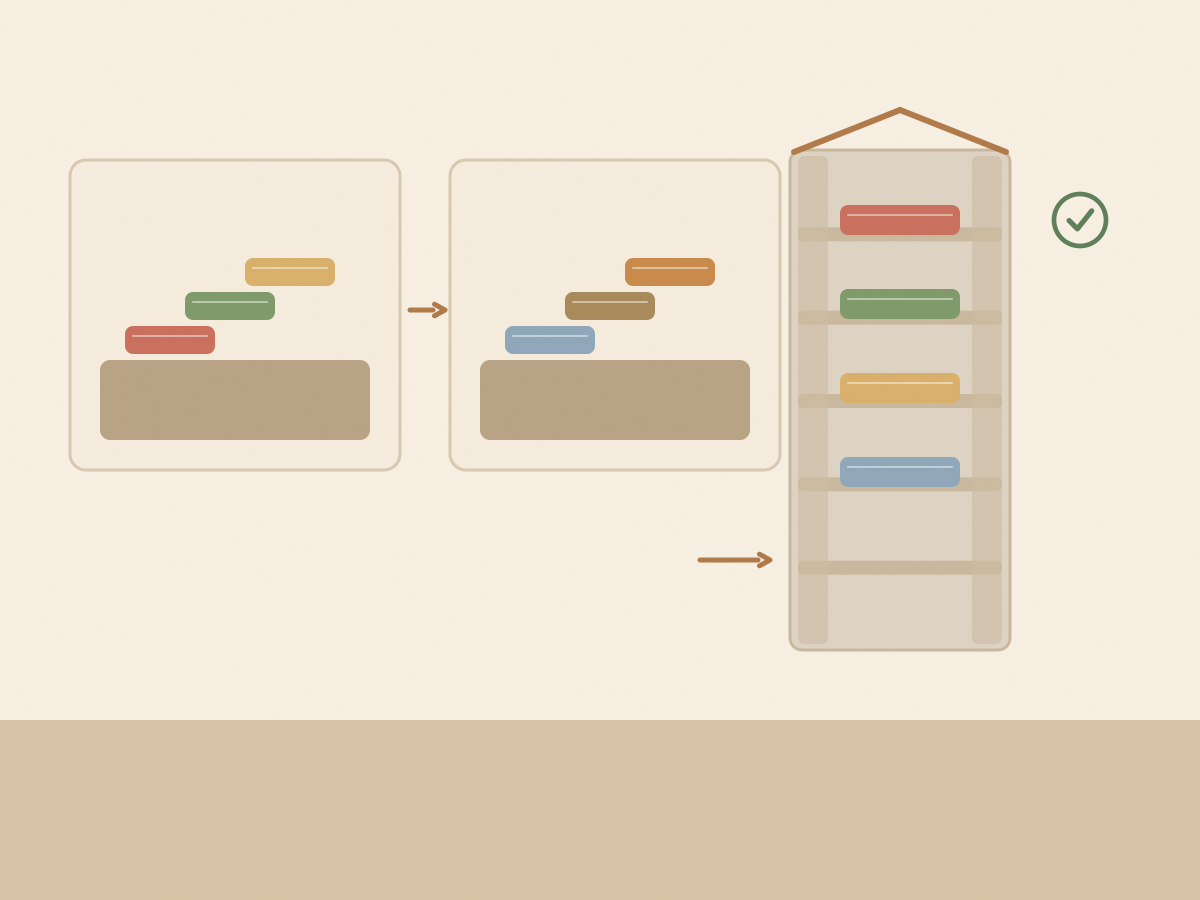
Work from the top down. The top shelf is hardest to reach, so use it for light, seasonal items rather than the jeans you wear every week. The middle shelves are the prime zone for everyday folded clothes, and the lower shelves suit heavier items and shoes.
The listing mentions towels, clothing, shoes and small things pockets. A practical split is: towels or bedding on top, tops and knitwear in the middle, jeans and trousers below them, then shoes or bulky items at the base. Use the three side pockets for socks, belts or small accessories that would otherwise slide between shelves.
Fold to the shelf, not to a generic rectangle. A stack that is wider than the shelf will sag at the edges, and a stack that is too tall will press against the shelf above. Keep each pile below the underside of the next shelf so you can slide items out without lifting the whole stack.
The description says the organiser has drawers, but it does not describe their size or material in detail. Check what arrives before you assign small items to them.

3. Avoid overloading any shelf
The seller claims a 40 kg total capacity and says each shelf is reinforced with 2 mm paperboard that holds up to 15 lb, or about 6.8 kg. Those figures are seller claims. Even if they are accurate, they describe a static load, not the repeated pull of a heavy stack every morning.
Distribute weight rather than concentrating it. Six pairs of jeans on one shelf is a different load from the same weight spread across two shelves. Put the heaviest items low, where the organiser is supported by the wardrobe floor or a drawer unit, and keep the top shelves light.
Watch the sides and the rail attachment. A hanging organiser carries load through the fabric and the Velcro rail, so a lopsided pack can pull it out of shape. If the organiser starts to sag or twist, remove weight rather than adding more.
Do not treat the capacity as a target. Leave spare capacity for the odd pair of shoes or a towel, and check the stitching and the rail attachment after the first week.
4. Plan seasonal rearrangement
A wardrobe organiser works best when the contents change with the season. At the start of summer, move heavy knitwear to the top shelf or a storage bin and bring lighter clothing into the middle. Reverse the swap at the end of the season.
Use the changeover to clean the shelves. Wipe the fabric with a damp cloth and let it dry fully before reloading. Check the side pockets for receipts, hair ties and other small items that accumulate.
Keep a small donate or repair pile beside the wardrobe during the swap. If an item has not been worn for a season and does not fit the shelf, it is taking space that could hold something you use.
Write nothing on the fabric unless you can remove it. A label on the outside of the organiser may be visible through a glass door, and adhesive can pull the non-woven fabric. Use a removable tag on the rail instead.
The six-layer hanging closet organiser can make a tall wardrobe more usable if the dimensions and rail suit your space. Confirm the internal measurements and treat the stated capacity as a limit to stay well under.
Before you buy: a short checklist
- Measure the rail-to-floor height and the internal width and depth.
- Check the door swing and the space below the organiser.
- Inspect the rail and its fixings before hanging a loaded organiser.
- Plan which category goes on each of the six layers.
- Keep the heaviest items on the lowest shelves.
- Leave spare capacity rather than filling to the stated limit.
- Check the side pockets and drawer sizes on arrival.
- Check the current price, stock and shipping on the listing.
Two common questions
Will the organiser fit every closet?
No. The listed size is about 108 by 31 by 34.5 cm, and the hanging height, rail and door swing all need to suit your wardrobe.
Does the listing state it can hold shoes?
The product title mentions clothes and shoes storage, but the description does not show a dedicated shoe compartment. Check the shelf depth before relying on it for shoes.