
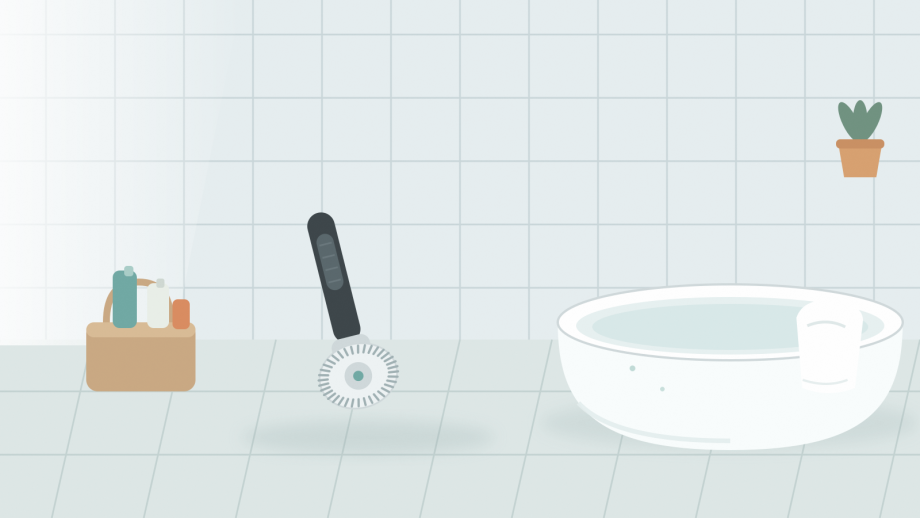
A four-head cordless spin scrubber earns its place on hard, wet surfaces: bathroom tiles, grout lines, bathtub rings, sink basins, shower screens and kitchen splashbacks. It is far less useful on delicate finishes, tight joints, upholstery and anything that needs precision rather than rotation. This model is listed with two speeds, USB-C charging, an IPX6 body and four heads, but the listing does not name the heads or state a charge time. Check those details before you buy, and read IPX6 as resistance to water jets, not permission to dunk the tool.
1. Match the four brush heads to cleaning surfaces
The listing confirms four replaceable heads but does not name them, and the product photos do not label which head suits which job. That is the first thing to clarify with the seller, because the answer changes how useful the tool is for your home.
Sets of this kind usually fall into four broad groups: a flat brush for broad surfaces, a narrow or pointed brush for corners and grout, a softer brush for delicate surfaces, and a sponge or polishing pad for smooth fittings. Treat that as general guidance rather than a description of this set until the seller confirms it.
A flat brush will do most of the work: tub walls, shower bases, basin bowls and large tiles. A pointed brush reaches grout lines, tap bases and corners where a round head cannot sit flat. A softer brush suits glass and polished surfaces, where stiff bristles can dull the finish. A pad is for buffing rather than shifting heavy residue.
The cordless spin scrubber is a scrubbing tool, not a polisher, and it will not replace a detail brush for tight work. Test any head on a small, hidden patch first if your tiles, bath or fittings are gloss, acrylic or coated.

2. Decide when either speed setting is useful
The listing says there are two speeds, one for light messes and one for stubborn ones. It does not state rotation speeds, so choose by task rather than by number.
Use the lower setting for routine work: weekly soap scum, light bathroom film, basin rims and anything you are scrubbing near a finish you want to protect. You get more control and less spray. Use the higher setting for grout, dried residue, textured tile and the ring around a bath, where you want the bristles to work rather than your wrist.
Technique matters more than speed. Keep the head moving, let the rotation work, and avoid pressing hard, which slows the head and spreads water. Work in small sections and rinse as you go, or you will just move the mess around.
The listing claims up to 45 to 60 minutes of cleaning per charge. That is a seller figure, and real runtime will depend on the speed you use, how hard the motor is working and the age of the battery. Plan to charge between bigger jobs rather than expecting a full house clean from one charge.
3. Check charging and wet-use boundaries
The tool charges over USB-C, which is convenient in a bathroom or laundry. The listing does not state the charging time, whether a cable is included, or what type of power adapter is required, so confirm those before you order if they matter to you.
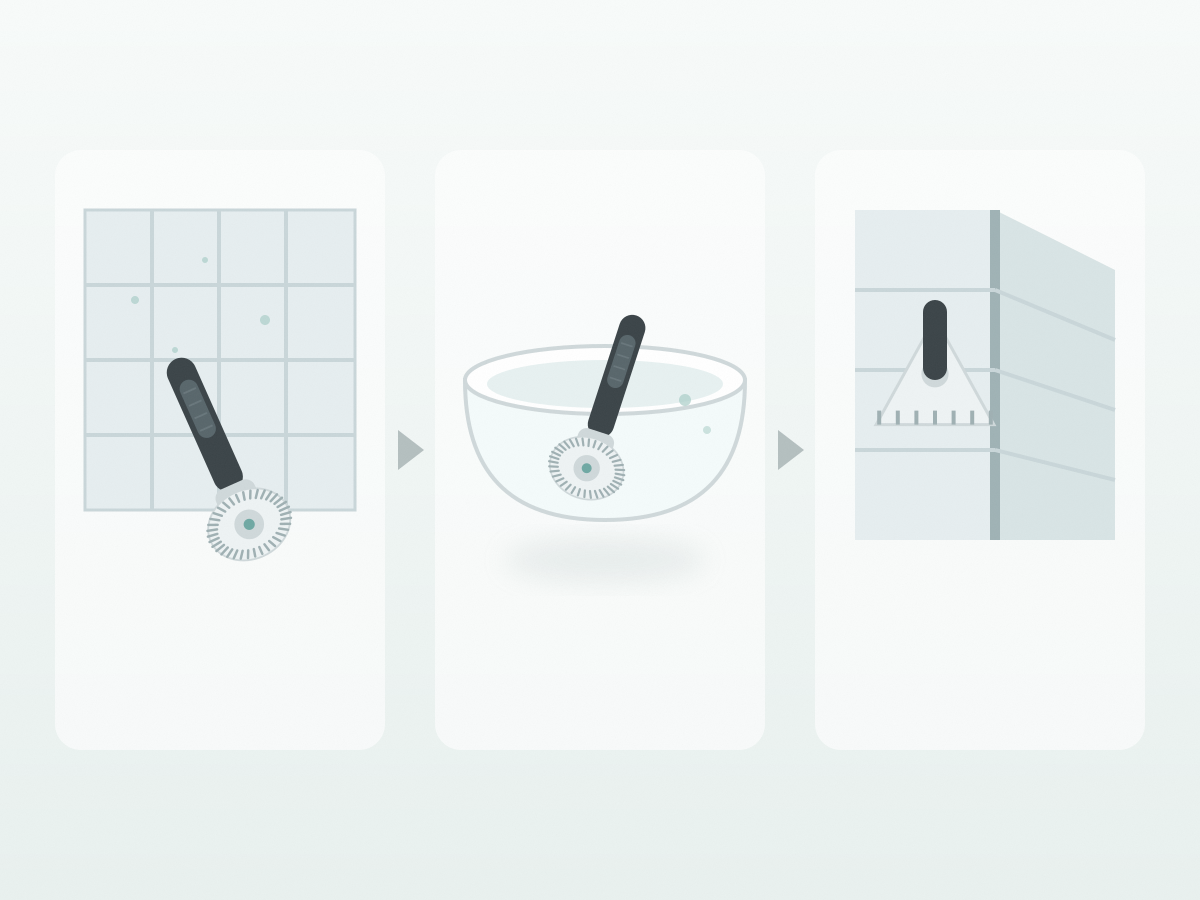
The IPX6 rating refers to protection against strong water jets. It is not an immersion rating, and the listing does not say the scrubber can be submerged. Keep the body out of a filled sink or bath, do not charge it while it is wet, and dry the charging port before plugging it in. If water does get into the port, stop using it until it is dry.
It is also a scrubber, not a sanitiser or steam cleaner. It lifts residue and scum; it does not make any claim to disinfect a surface. If you need hygiene reassurance, that comes from the cleaning product you use and how you rinse, not from the brush alone.
Keep the charger away from splashes and give it a dry shelf.
4. Clean and store heads after a task
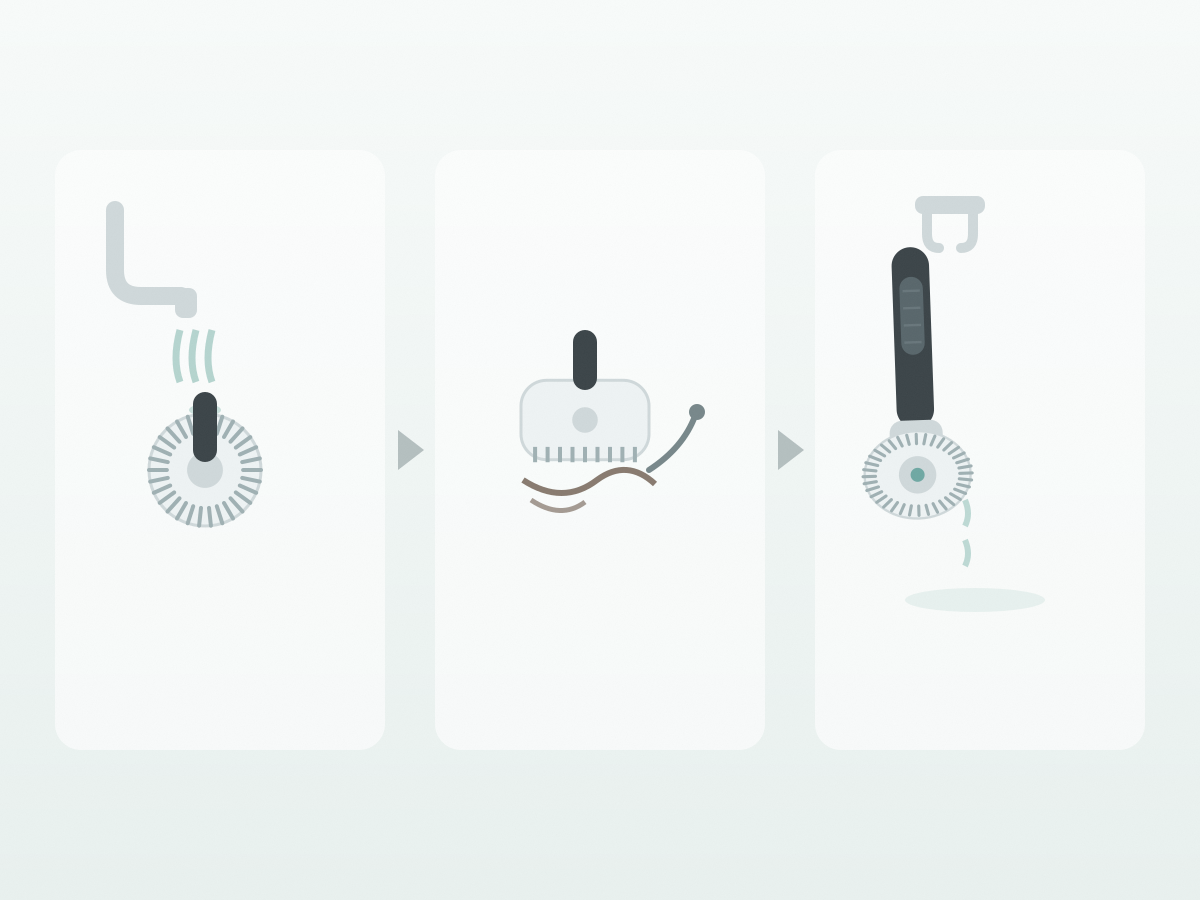
Heads collect hair, soap residue and grit, and a dirty head spreads both. Rinse the head after each job, work out hair with your fingers or a comb, and shake out excess water.
Dry the bristles facing down so water drains away from the hub, and let the head air-dry fully before it goes back on the tool or into a cupboard. Storing a damp brush in a closed cabinet is how bristles start to smell. The listing does not give washing instructions, so do not put the heads through a dishwasher or soak them in bleach without checking with the seller.
Keep bathroom heads and kitchen heads separate. It is a simple habit that stops bathroom residue ending up on a sink you prepare food in. Check the bristles every few weeks; once they are splayed or flattened, the head is doing less work than you think, and a replacement is cheaper than scrubbing twice.
Wipe the body with a damp cloth rather than rinsing it under the tap.
Before you buy: a short checklist
- Confirm which four heads are included, and what each is for.
- Check that your main surfaces are hard and sealed, not delicate or unsealed stone.
- Ask for the charge time and whether a USB-C cable is included.
- Confirm you will use it for scrubbing, not for sanitising or polishing.
- Plan a dry charging spot away from splashes.
- Check the current price, stock and shipping cost on the listing.
Two common questions
Can the scrubber be submerged in water?
No. The listing rates the body IPX6, which refers to resistance against water jets rather than immersion, and it does not say the tool is submersible. Rinse the head separately, wipe the body, and keep the charging port dry.
Which head should I choose for tile and grout?
The listing does not label the heads, so confirm the set with the seller first. As a general rule, a flat brush suits the tile face and a narrow or pointed brush suits grout lines and corners. Test on a hidden patch before using a stiff brush on glossy or coated tiles.