
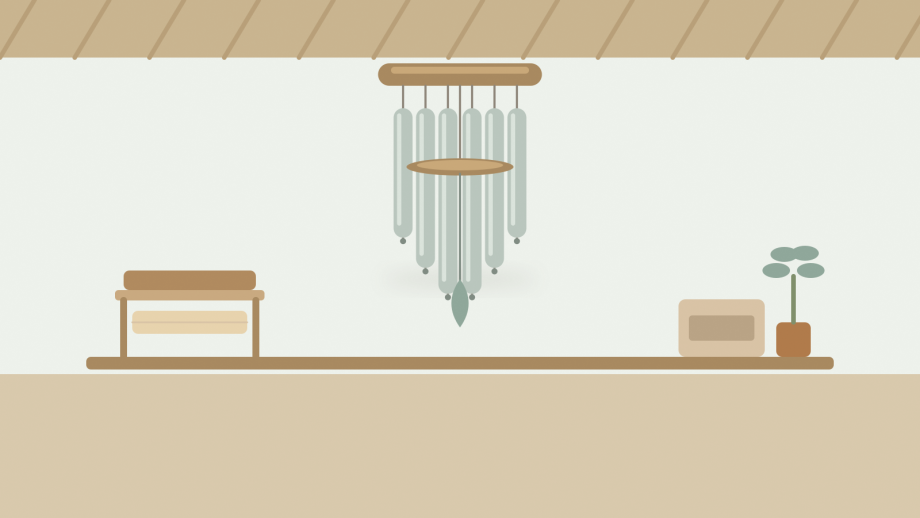
Choose the spot before you choose the hook. A wind chime needs enough breeze to move, enough clearance to swing without hitting a wall, and enough distance from bedrooms and boundaries to stay welcome. This listing describes a 68 cm chime with six anodised aluminium tubes and a windcatcher. It does not give a measured sound level or a weather-life rating, so plan around your site rather than the pictures.
1. Measure the hanging area
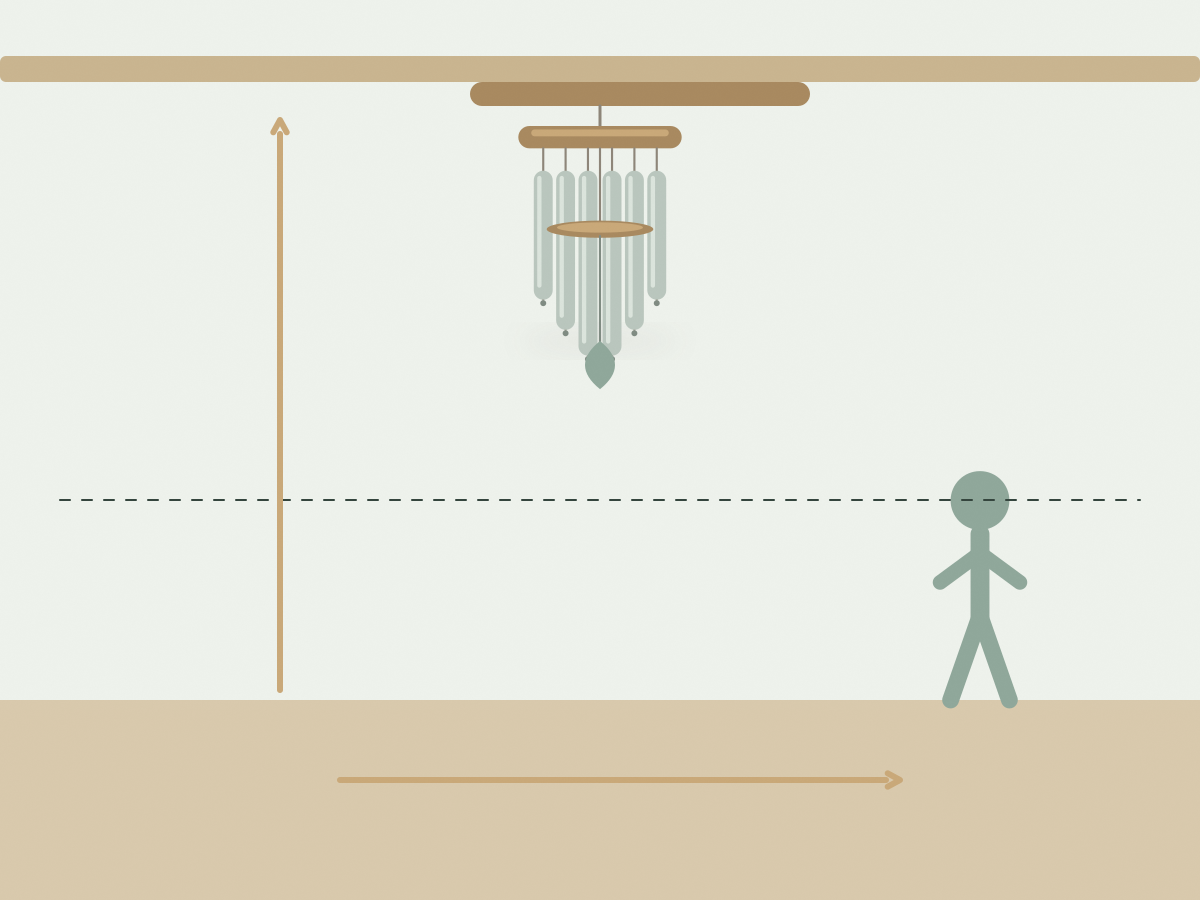
The listed overall length is 68 cm. That is the number to use when you check clearance: add the height of the hook and the distance the chime swings in wind. A chime that hangs too low can hit a table, a railing or a person’s head, and one that hangs too close to a wall will knock against it instead of ringing freely.
Find a fixing point that can carry the weight and the movement. A pergola beam, a porch rafter, a sturdy branch or a shepherd’s hook are the usual options mentioned in the listing. Check that the fixing is sound before hanging anything, and do not rely on a weak hook or a loose gutter bracket.
Leave at least a hand’s width between the tubes and any surface. On a balcony, keep the chime inside the railing rather than dangling over the street, and make sure it cannot swing into a neighbouring balcony or a window.
Think about access for cleaning and removal. A chime high on a roof is hard to take down before a storm, while one at head height in a walkway is easy to bump.
2. Consider sound and wind exposure
The seller describes a deep tone produced when the breeze drives the tubes. That is a description, not a measured note or volume. The sound will change with the wind, the mounting and the surfaces around it, so do not expect the same result in every location.
Wind exposure matters more than the chime itself. A sheltered courtyard may move the chime gently for short periods, while an exposed coastal garden can keep it moving for days. Strong sustained wind is hard on the cord, the striker and the finish, and it can drive the chime against its fixing.
A tree branch moves in the wind, which adds motion but also abrasion. A solid beam is more stable but gives less sway. On a balcony, the airflow around the building can be gusty even when the street below is calm.
Place the chime where you will hear it without it dominating a room. Near a bedroom window or an outdoor seating area, a large aluminium chime can carry further than expected. Listen from the spots where you spend time before fixing the hook permanently.
3. Discuss garden or memorial-gift placement sensitively
The listing presents the chime as a memorial gift for a mother or grandmother, and notes that wind chimes carry meanings of peace, healing and remembrance in various cultures. Treat those meanings as cultural associations, not as verified claims about the product or its effect.
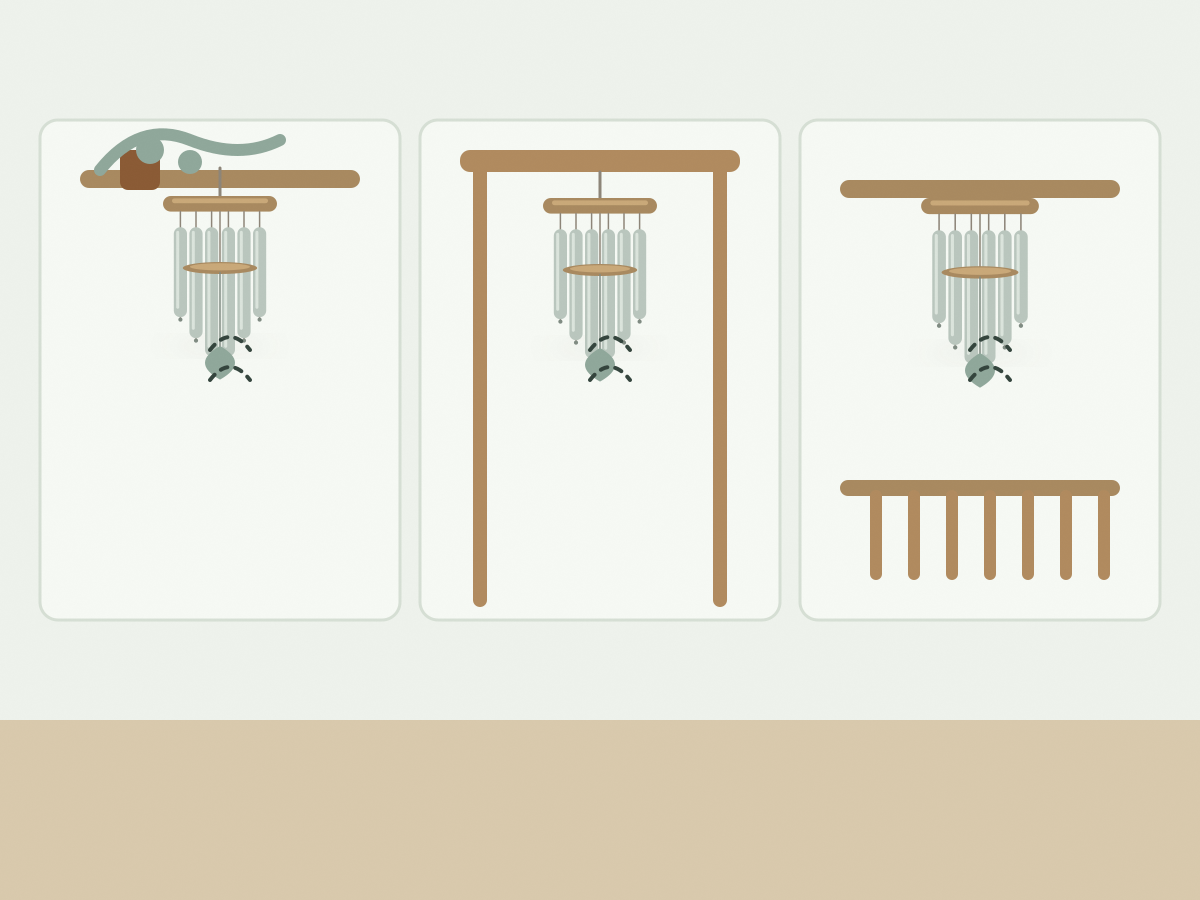
If the chime is a gift, let the recipient choose the spot. A memorial chime often belongs somewhere personal: a favourite garden seat, a patio corner or a tree seen from the kitchen window. Avoid placing it where it will be knocked by visitors or tangled with a clothesline.
For a garden, hang it away from bird feeders and nesting boxes so the movement does not disturb wildlife. Keep it clear of a pergola cover that could flap against the tubes, and check that falling leaves or vines will not jam the striker.
On a patio, a corner near a beam is usually easier than the centre of an open span. Make sure the chime does not hang over a barbecue, a heater or a path where someone carries hot food.

4. Plan care and neighbour consideration
Aluminium is described as anodised and sandblasted to resist corrosion and rust. That is a seller claim, and coastal air is still demanding. Wipe the tubes and the top disc with a damp cloth, dry them, and check the cord for fraying. Replace a worn cord before it fails.
Take the chime down before a severe storm or a long period of strong wind if it is easy to reach. Inspect the hook and the fixing at the same time. A chime that has fallen is no longer decorative, and a swinging metal tube can damage a window.
Neighbours are part of the placement decision. In a close-set suburb or an apartment building, a large chime near a shared boundary can be heard at all hours. Move it further from the fence, hang it lower where nearby structures block the sound, or choose a calmer corner.
Clean the windcatcher as well as the tubes. Salt, dust and spider webs change the way the chime moves. A quick wipe and a check of the knots will keep it hanging safely.
The 68 cm aluminium wind chime suits a sheltered patio or garden spot with a sound fixing and clear swing room. Confirm the fixing, the wind exposure and how far the sound will travel before you commit to a permanent hook.
Before you buy: a short checklist
- Check the 68 cm length against your hanging height.
- Allow swing clearance on every side.
- Choose a fixing that can carry the weight and movement.
- Check the wind exposure at the intended spot.
- Listen from bedrooms and seating areas before fixing it.
- Consider the neighbour’s side of the boundary.
- Plan how you will remove it before a storm.
- Check the current price, stock and shipping on the listing.
Two common questions
What overall length is stated?
The listing states 68 cm. Measure your clearance from the fixing point, not just the chime body.
Will the chime sound the same in every location?
No. Wind, mounting and surrounding surfaces all change the movement and the sound. The listing gives no measured acoustic result.